
Displaying Information in AI Native Mode
Why ceasing to build closed visualizations is the first step to enabling the true potential of AI agents in your organization

Today I want to share with you a reflection that arose from a conversation with a colleague and that, frankly, I believe marks a turning point in how we understand our work at Plataforma.
Recently, a colleague, let’s call her Silvia, told me about her team’s situation. They manage a tool called Performance Reporter that centralizes performance metrics for production applications.
The workflow was the same as always:
collect data,
apply business logic,
and generate a dashboard in Power BI so that the Engineering Managers could understand what was happening.
The result? Frustration.
Users didn’t understand where the values came from or how they were calculated. They felt like they were looking at a “black box.”
Silvia launched a survey to better understand what the solutions to the problem might be, and added a question almost instinctively:
Would you like to have an AI Agent (like Claude Code or Cursor) to obtain information and insights whenever you want?
The answer was 100% YES.
And what does this mean?
The end of “I give you the visualization only”
We are experiencing a paradigm shift.
👉🏼 Users no longer want the data owner to decide what is important to them through a static graph. They want to use their own AI assistants to access personalized information and gain real-time insights.
It’s no longer about viewing data; it’s about interacting, about conversing with it.
If we take a look at what’s happening in the industry, we can see that, regarding the annual adoption rate of AI, between 2024 and 2025, it will increase from 13–14% to approximately 20%.
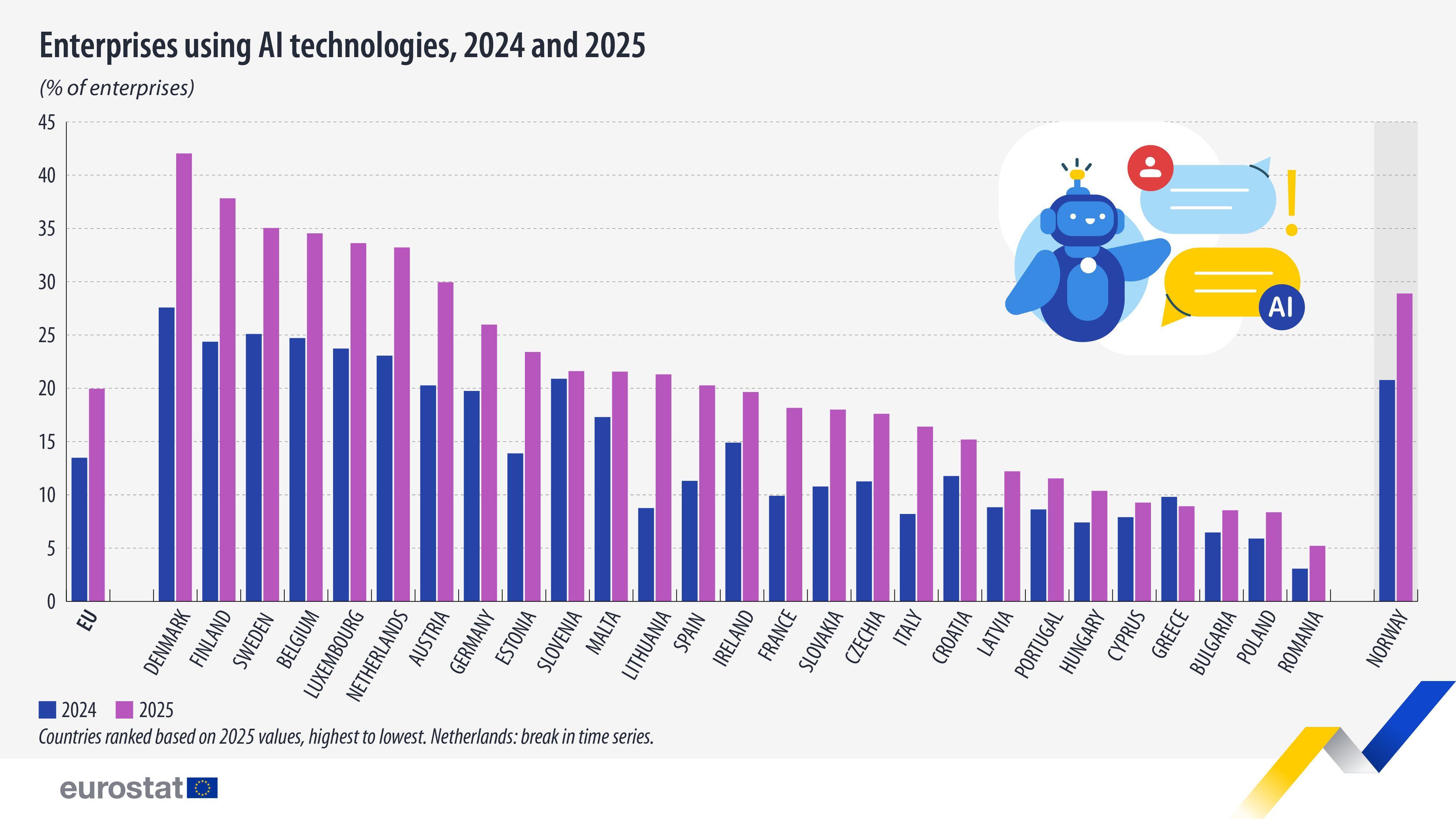
☝🏼 This aligns with Silvia’s survey results.
Beyond the statistics, in my experience, the real leap forward is in Engineering Management. For this role, AI is becoming the primary tool for analyzing system health and team efficiency.
We are moving from a model where data is a “destination” (the dashboard) to a model where data is the “fuel” for the client’s AI.
What does it mean to be AI Native on the Platform?
For you, working in the trenches of engineering, this is a game-changer. It means your job is no longer just to present information, but to expose it in a way that AI can consume.
In this new scenario, the paradigm shifts as follows:
Before: The data owner presents the data to you in the way they deem best for you.
Now (AI Native): The data owner makes the data available to your AI clients so they can consume the information as you wish.
✨ Takeaways
Here are the key points to help you think in AI Native mode:
Prioritize availability over visualization: Invest less time in the color of the chart and more in ensuring your APIs and data models are readable and contextual for an AI agent.
Total transparency: AI needs to know the how and the why. If you don’t expose the logic of your calculations, the agent won’t be able to explain anything to the user.
Rapid adoption: Engineering Managers and Engineering Directors are adopting these tools at an incredible pace. Either you prepare your data for them, or your platform will become obsolete.
As I always say, we learn from what we see in the real world. Are you already preparing your tools to be used by AI agents, or are you still polishing that dashboard that no one looks at?
I’d love to hear your thoughts. Have you noticed this change in your team? Write to me or leave a comment! I read and reply to everyone.